
A home builder's guide to Texas ⚡️ electricity
If you're new to the Texas 🏠 home construction industry, there's a few things to learn about connecting electricity to your sites.
 UtilityOn Team
Electricity works a little differently in the Lone Star State.
Since 2002, much of Texas has operated under a deregulated electricity market. This means most Texans (around 85–90%) can choose their Retail Electric Provider (REP) - the company that sells electricity and sends the bill - while the local Transmission and Distribution Utility (TDU) owns and maintains the power lines and meters.
The system is overseen by the Public Utility Commission of Texas (PUCT), and the grid itself is managed by Electric Reliability Council of Texas (ERCOT), which balances supply and demand across most of the state.
For home builders, understanding who does what - and who to call - is critical to getting meters set quickly and avoiding costly delays.
Texas utilities
The four major electricity utilities in Texas are Oncor Electric Delivery, CenterPoint Energy, AEP Texas, and Texas New Mexico Power (TNMP). These companies do not sell electricity plans.
Oncor is one of the largest companies in Texas with over 10 million customers across approximately 400 cities and towns. CenterPoint serves more than 2.5 million customers in the Houston metropolitan area, while AEP Texas serves over 1 million customers in southern and western Texas. TNMP operates primarily in rural and suburban areas.
Okay, so what do these utilities actually do?
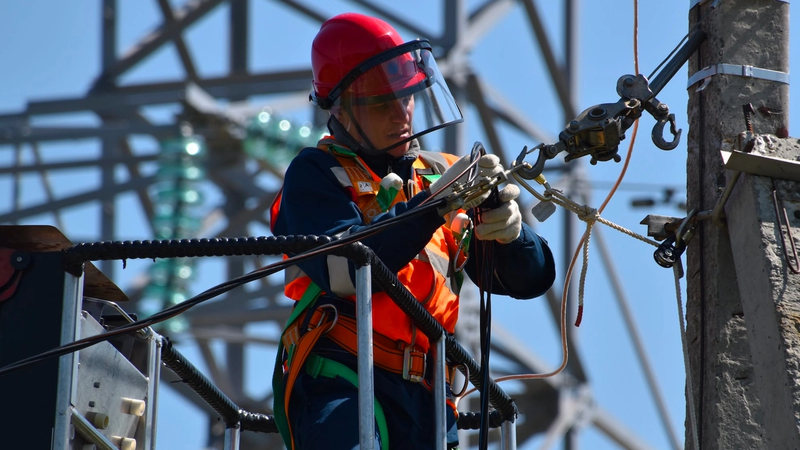
Texas utility responsibilities
Electricity Generation
In deregulated Texas (ERCOT territory), electricity generation is competitive and separate from utilities. Power plants - fueled by natural gas, wind, solar, coal, or nuclear - are owned and operated by independent generation companies that sell electricity into the wholesale market managed by the Electric Reliability Council of Texas (ERCOT).
Transmission and Distribution Utilities (TDUs) such as Oncor Electric Delivery or CenterPoint Energy generally do not generate electricity. Their role begins after power is produced.
Electricity Transmission
Utilities operate high-voltage transmission infrastructure that moves electricity from generation facilities across long distances to substations near communities. This includes transmission lines, towers, and major substations.
Transmission costs are regulated by the Public Utility Commission of Texas (PUCT) and recovered through delivery charges on customer bills. Builders typically encounter transmission considerations only when large developments require upstream capacity upgrades.
Distribution Infrastructure
Distribution is where most builders interact with utilities. TDUs design, build, and maintain the local system that delivers electricity from substations to individual homes. This includes primary lines, transformers, secondary service lines, and electric meters.
Utilities are responsible for setting meters, assigning ESI IDs, and energizing new construction once inspections and account setup are complete. Processes and timelines vary by utility territory, which is often where coordination challenges arise.
Power Outage Management
During outages, the local utility — not the Retail Electric Provider — restores service. Utilities monitor grid reliability, dispatch line crews, and repair damaged infrastructure.
For builders nearing closing, outage coordination and restoration timelines can directly impact inspections, walkthroughs, and move-in schedules.
Infrastructure Maintenance
Utilities maintain poles, underground lines, transformers, substations, and metering equipment to ensure reliability and safety. This includes routine inspections, vegetation management, equipment replacement, and system upgrades.
These activities are funded through regulated delivery rates approved by the PUCT.
Energy Efficiency Programs
Texas utilities are required to administer energy efficiency programs funded through delivery charges. These programs may provide incentives for high-efficiency HVAC systems, insulation upgrades, lighting improvements, and other qualifying measures.
Programs vary by utility territory and are typically delivered through approved third-party providers.
Renewable Energy Integration
While utilities do not typically develop renewable generation themselves in ERCOT, they play a key role in connecting wind and solar projects to the grid. They expand and maintain transmission and distribution infrastructure to accommodate new generation and distributed energy resources such as rooftop solar.
Texas leads the nation in wind generation and continues rapid solar expansion, supported by ongoing grid infrastructure investment.
So what does all that mean for home builders?
Ultimately, before connecting electricity to your site, you'll first need to establish which utility to contact and how exactly they handle new connections.
Every utility does this differently and you'll likely spend many hours for every site chasing meter updates and permits and then closing or transferring accounts, all using different processes and call centres.
Read next
More field notes from the UtilityOn team.
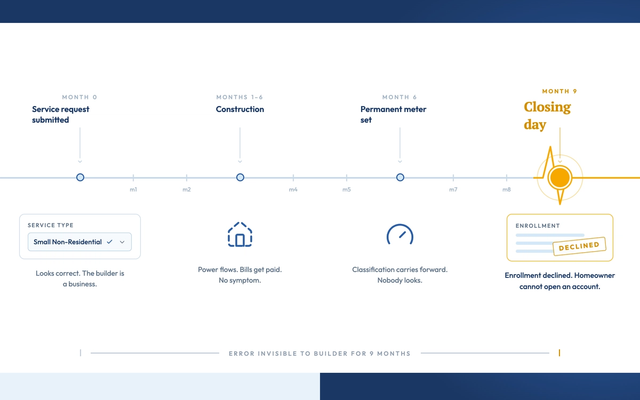
The Dropdown Menu That Shows Up on Move-In Day
A meter classified as Small Non-Residential looks correct all through the build. It only fails when the homeowner tries to turn on the power. Why Texas builders never see it coming.

AI in Homebuilding: 5 Takeaways from the GHBA Developers Council Panel
AI in homebuilding: five lessons from the GHBA Developers Council panel — including the $400K hiding in most builders' utility coordination
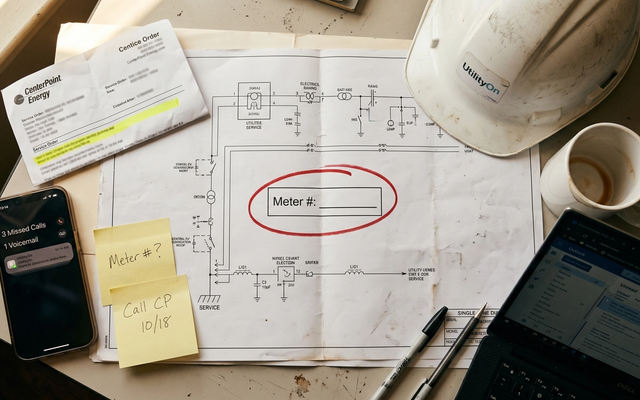
How to Avoid Delays on Your Permanent Meter When Adding Solar to a New Home Build
Rooftop solar on a spec home can add 60+ days to your permanent meter timeline. Here's what causes the delay, how to fix it, and how to avoid it entirely.